May 28, 2024 • Garrett Garitano
Exploring the Future of MFA: Unveiling the Emerging Trends and Technologies
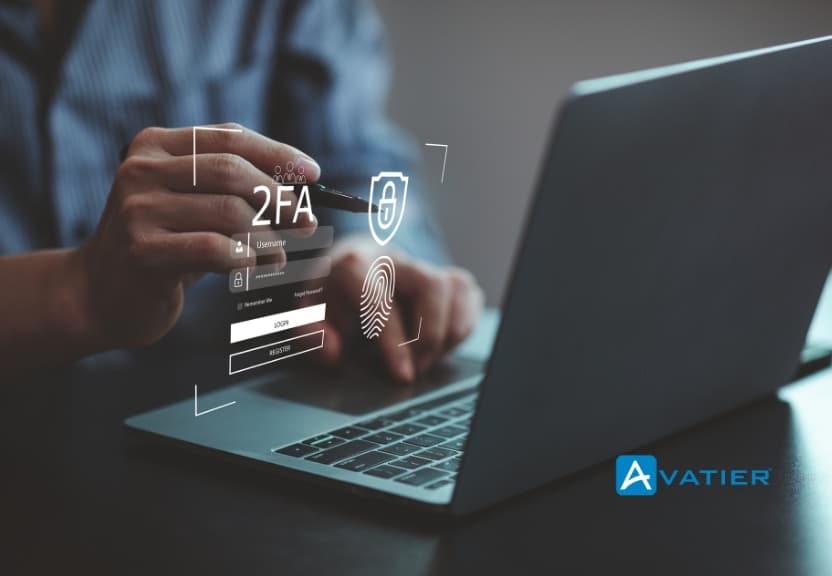
The future of multi-factor authentication is poised to be both exciting and transformative.
Meaning Of MFA
In the era where the internet has become more powerful than the physical one, cybersecurity concerns become more than just a part of our lives but an integral part of our lives. Among other things, multi-factor authentication (MFA) has come to the fore as a fundamental instrument for information security and dealing with those cyber security threats that are continuously evolving. As the digital world keeps on growing and involving each day, MFA is an important aspect of safeguarding your data and the security of all your devices.
IIFA adds security layer to the authentication process, necessitating more than one proof of identity to be presented before granting access to accounts or systems. By using this method, the risk of unauthorized access will be greatly reduced making it essential to business and private persons. MFA is a vital security solution that will protect your data, even if hackers develop more complex techniques.
Emerging Technologies In MFA
MFA now is at the cusp of revolutionary changes, with numerous new technologies that can provide a better user interface and the most updated information security measures to keep the information safe. Here are some of the cutting-edge developments shaping the future of MFA:
Biometric Authentication: Attaining user identity verification based on physical or behavioral characteristics such as fingerprints, facial recognition or voice recognition, biometric authentication represents the most convenient and, therefore, highly secure way of identifying users by such methods. These technologies are growing in accuracy and user-friendliness, which makes them the first choice of many organizations where they want to deploy their MFA solutions.
Behavioral Analytics: Using user behavior diagnostics that can identify keystroke rhythms, movement of the mouse, etc., and the device being used, behavioral analytics can add an extra security layer. This strategy enables you to notice incongruence in the user habits, hence you can identify attempts to unauthorized access and set other steps for verification.
Contextual Authentication: 2FA is no longer the endpoint of security, it is integrated with a contextual intelligence that includes the user’s IP address, device, and network. This “just in time” approach to authorization enables the process to be adjusted to the context of the case, therefore providing security with the only expense of simplicity of use.
Passwordless Authentication: Prompted by the increasing trend to eradicate the pitfalls surrounding legacy password-based systems, passwordless authentication mechanisms that include FIDO2 and WebAuthn are now becoming popular. With that, security technologies of this kind are based on using secure hardware-based keys or biometric factors, so, the resulting authentication process is easy and secure.
Blockchain-based MFA: Blockchain technology has been utilized to provide the security and confidentiality features for the MFA systems because of its inherent distributed nature. These blockchain-based MFA alternatives can bring additional transparency, immutability, and less central control vulnerabilities that makes them a perfect choice for companies looking to harden their security posture.
Current Trends In MFA
As the MFA landscape continues to evolve, several key trends are emerging that are shaping the future of this critical security technology:
- Increased Adoption: Rising awareness and need for certain security mechanisms according to the cyber security industry, multi-factor authentication is the trend these days across all industries. Organizations and companies are witnessing the realization and acceptance that the deployment and use of MFA make their important information safer and secure.
- Seamless User Experience: MFA providers are all about providing their customers with a seamless experience and not the obstacles that would not even betray their efforts. Such technologies accomplish this by making authentication much easier and customers less disrupted, in the process of making the solutions more accepted and customers satisfied to increase the number of users.
- Adaptive and Risk-based Approaches: MFA systems with varying degrees of intelligence are being developed, and they also can implement risk-based authentication. It is the risk-related considerations that beget the security requirements provision. By the side, the risk-based approach advocates that the level of authentication should be utilized to scale the risk and provide security without compromising convenience.
- Compliance and Regulatory Demands: Such regulatory bodies and industry standards are becoming more and more stringent, especially in sectors such as finance, health and government, that are always in need of a 2 factor authentification. This effect consequently makes companies be compulsory to deploy very effective MFA solutions to be fully compliant with regulation, rather to avoid the response of the GDPR and the penalties on regulation.
- Increased Interoperability: MFA solutions are not an exception to the interoperability trend, as a result of which vendors may have an open integration with different applications, devices and platforms. This integration then is a bond holding together the better and more robust secure structure which further makes the implementation and control of MFA policies undemanding.
The AI In The Future Scenario Becomes A Part Of The MFA
AI is one of the firms that is making MFAs more effective than they have ever been by ensuring maximum cybersecurity and the best customer experience. Here are some of the ways AI is shaping the future of MFA:
- Intelligent Risk Assessment: This process is made possible since machine learning frameworks can analyze a large number of data points comprising user behavior, device information, and contextual factors to determine the level of risk for each MFA request. This is where we see the risk analysis with intelligent mechanisms taking the scene, which powers the adaptive authentication thus adjusting the security response according to the current situation.
- Fraud Detection and Prevention: AI-based MFA is capable of using technologies like machine learning and predictive algorithms in tracking and stopping fraud in a real-time mode. Data mining techniques offer a powerful means for extracting behavioral patterns and transaction anomalies. These can then be flagged as threats which can consequently trigger more security measures like verification steps.
- Personalized User Experience: AI does this by being able to deliver users with the most effective personalized experience which can be possible by utilizing customer’s preferences and behavioral models. This could be about having fewer steps for authentication, providing the most relevant information and connecting it with the users preferred devices and applications, among others.
- Continuous Authentication: AI-oriented MFA systems with two-factor authentication are those that are not limited by time and are in-session authentication and detecting the user behavior to prevent anything unauthorized activity. This indeed helps the organization to act in real-time, and it responds to attempted unauthorized access or attacks which are followed by strengthening the security posture as well.
- Automated Threat Response: AI-based MFA systems enable automated threat response, which would make them a candidate for taking on many functions such as account lockout, alert notifications, and incident response triggering. It will aid the supervision of the systems and may speed up the security measures as well as increase the efficiency of them, which will ultimately result in a decreasing number of cyber-security incidents.
MFA In Different Industries
Multi-factor authentication has been modified as a main security measure for various kinds of businesses and sectors, each one with a characteristic different from others as well as different problems. Let’s explore how MFA is being implemented and leveraged in different sectors:
Financial Services: In the case of the financial industry, it was MFA that was the first to be adopted by the financial supervisory authority following the banking laws that protect the sensitive information of financial transactions and systems. In the financial industry, MFA( Multi-Factor Authentication) solutions usually include biometric authentication methods like fingerprinting or facial scans that give customers maximum security confidence.
Healthcare: Hospitals, clinics and insurance companies in the healthcare domain heavily rely on MFA as a security tool to secure patients data, medical information, and the overall health data system. If we look more closely at the sector of medicine, we will find out that compliance with regulations is at the center and this has brought up the need for using MFA (Multi-Factor Authentication) that is why it is widely used today.
Government and Public Sector: Thus, government bodies and security agencies whose major task is to administer national security and citizens data are the institutions that have to delegate MFA to the citizens. The non-profits could advertise themselves by offering advanced MFA technology, with examples such as smart cards or hardware security keys, and with the accompanying behavioral analytics of the highest security level.
Retail and E-Commerce: Another main tool MFA widely uses in retail and e-commerce industries to combat fraud, unauthorized access to customer accounts and payment information as well as to secure online transactions is it. The employment of MFA option by retailers has become the endorser of the fraud prevention measure that gives confidence and reliability enabling the market to trust again.
Technology and Software: MFA is thought to be the cornerstone of the digital modern infrastructure, and every industry today, including technology and software, has to be the pioneer of its usage. This is usually the case with organizations having quite rigid security procedures to ensure the risks of intellectual property leakage, customer information and critical asset theft by cyber threats are minimalized.
Exploring The Future Of MFA: Future And Reality
Those who study MFA in the digital field will find that the field is developing and hence, the horizon of MFA is bound to be opened to revolutionary prospects and it will also cause transformational changes. Here are some predictions and possibilities that may shape the future of this essential security technology:
- Hyper-Personalized Authentication: Consequently, the MFA will also promote a more individual and user-friendly approach and it will accommodate the needs and preferences of the users. We will be dealing with a user experience here that could comprise fluency in connecting personal devices, login flows that are unique for each user and biometric alternatives that also reflect the user.
- Decentralized and Blockchain-based MFA: The blockchain characteristic of decentralization will be the determiner of MFA (Multi-Factor Authentication) in the future. This creates an environment where TPS gives birth to higher transparency of security as well as privacy. Blockchain MFA technology can also be introduced to provide users with a high level of autonomy in regards to the control over their identity and credentials, thus keeping the reliance of the system on the central agency at a minimum.
- Seamless and Invisible Authentication: What makes the MFA system work is no interruption and no need for hands. Generally, the latter is achieved through the combination of various factors – sensors of the ambient environment, behavioral analytics and context-related data used to obtain the continuous identity verification of the user without demanding their explicit involvement.
- Convergence of Physical and Digital Security: Since cyber attacks will become more complex and varied, MFA is not only part of the mitigation measures but also the bridge connecting physical and digital security. For example, improved figurative authentication policies could be adopted in conjunction with physical access control systems, biometric equipment and IoT (Internet of Things) sensors to create a common security system.
- Increased Regulatory Oversight and Compliance: It is anticipated that supervisory bodies, creating and controlling organizations, will get involved in the process of growing importance of MFA in the near future, and they will be obliged to adopt stricter regulations and standards of its implementation.
These organizations will have adopt well-versed technology and data privacy controls in place to giving credible and transparent information to their members and preventing the conflict of interests, theft of data, or regulatory penalties .
Conclusion
While the roadmap for multi-factor authentication might be paved with excitement and upheaval, the destination remains unclear. This entails the fact that the MFA surface is still undergoing the process of development and there is the emergence of new technologies daily. In the meantime, the authentication process will get more safe, more personalized, and easier for customers. Being the first and most credible method of securing information, sensitive data and assets in this fast-changing age of information security, MFA is all about doing exactly what it proposes to do.








